
HOPE Study

HOPE helps us imagine a different future.
HOPE was our large-scale study to test how our science may help people with mild-to-moderate Alzheimer’s preserve the everyday abilities they depend on.
673 participants took part in HOPE.
Our largest clinical study included people with different levels of cognitive impairment. Researchers looked at two groups, with MMSE scores of 21–28 and 15–20, to understand how the results differed between them.
The results offered encouraging evidence that Spectris could help slow the decline in thinking, memory and everyday abilities in those with early symptomatic Alzheimer’s disease, giving people and families new reasons for hope.
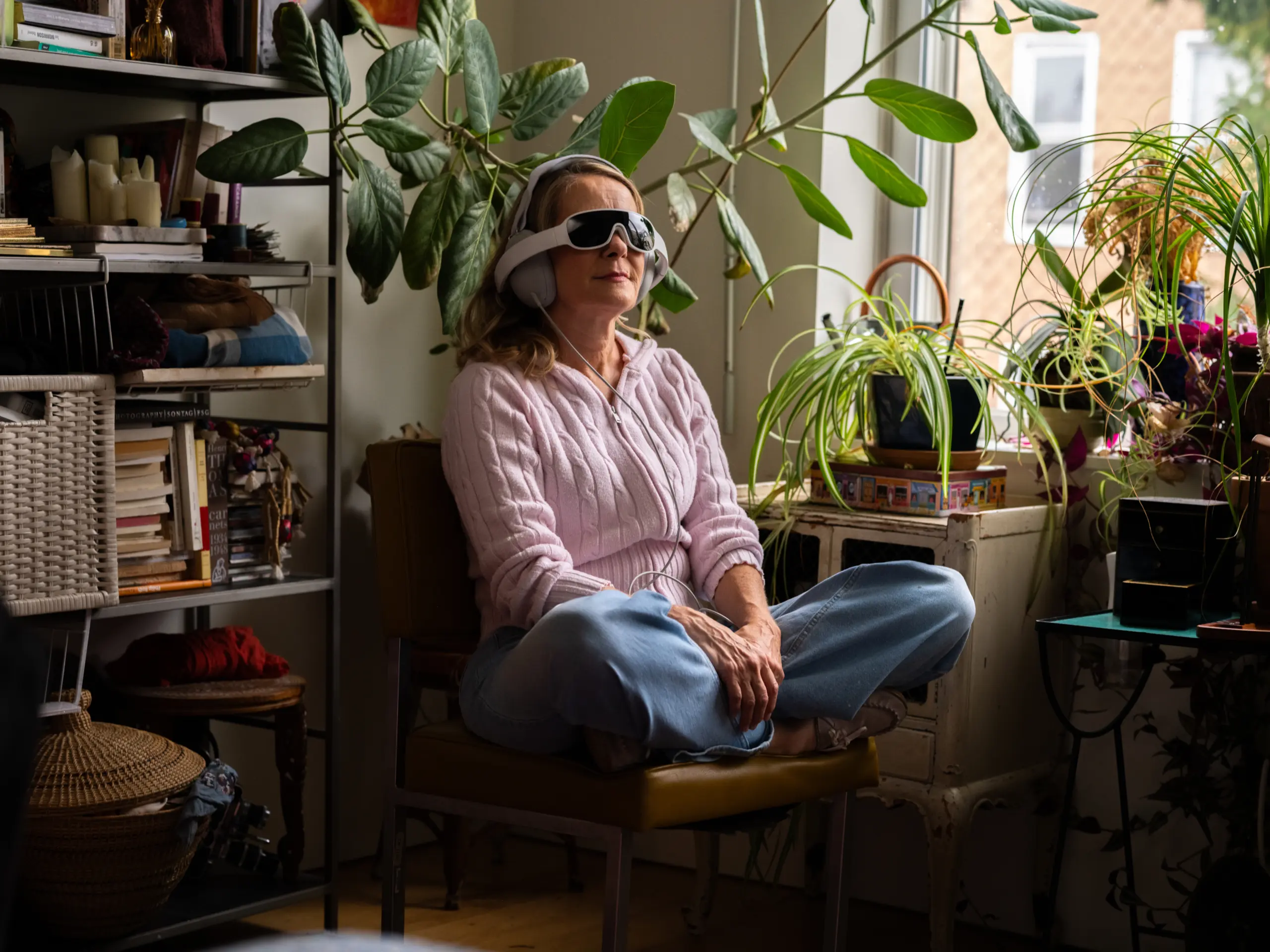

At home.

One hour a day.

Non-invasive.
The everyday is everything.
The moments we share, the relationships we nurture, and the things we love doing are what make life meaningful.

Daily Activities.

Communication.

Social Life.

General Independence.

Thought Processing.
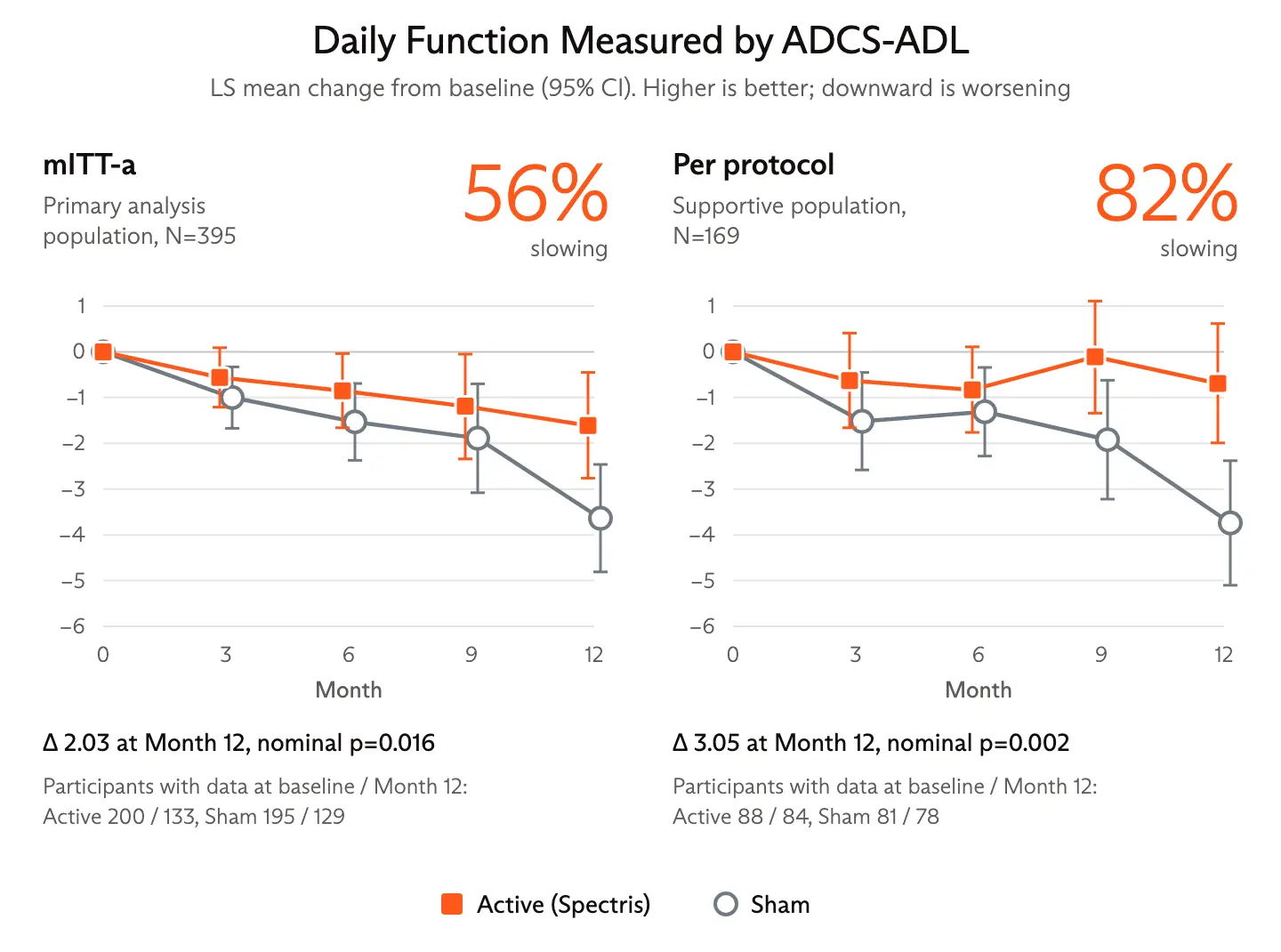
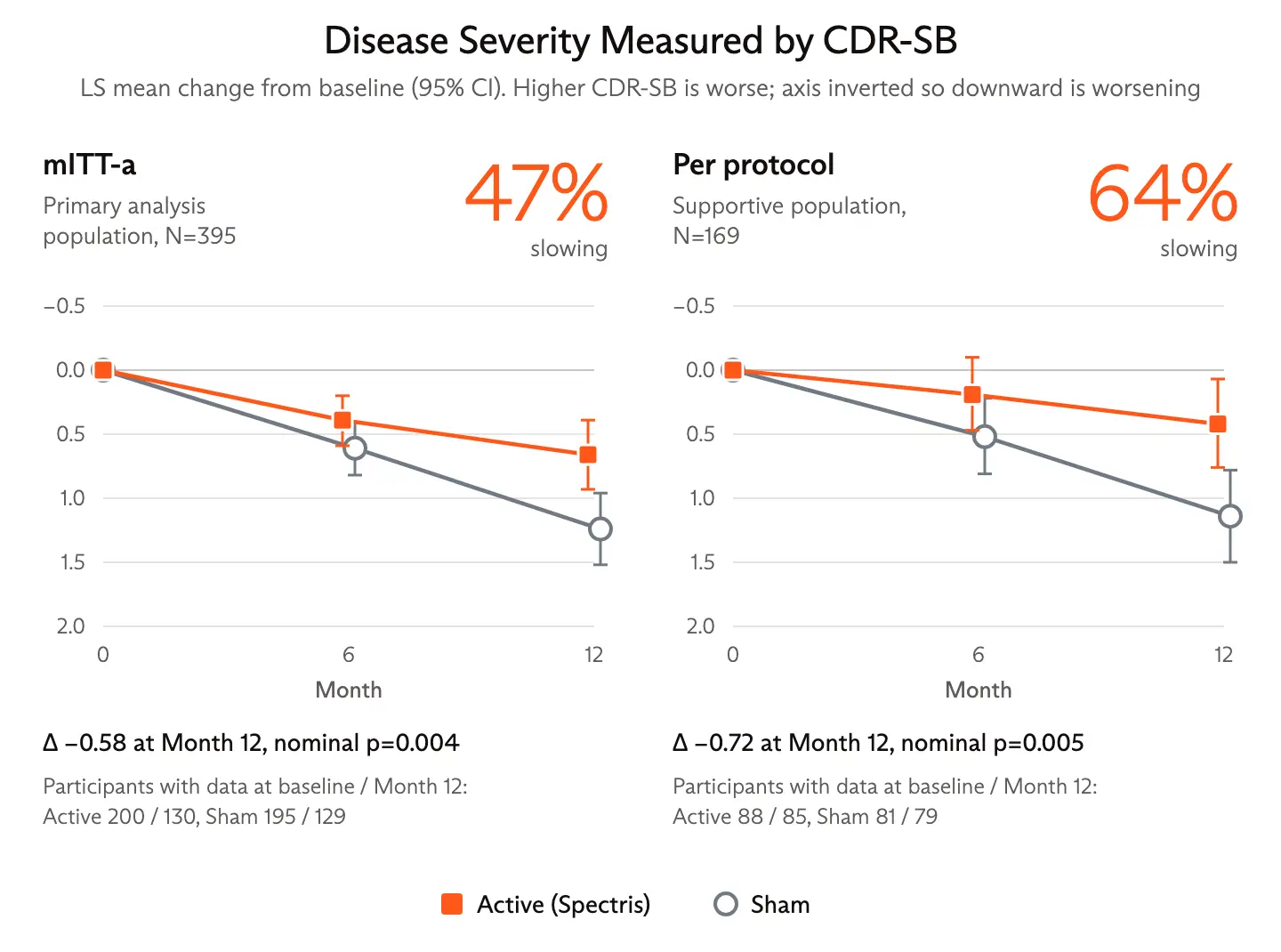
In early symptomatic Alzheimer’s disease, Spectris slowed decline in daily function and disease severity over 12 months.
Slower decline in daily function
Slower progression of disease severity
Beginning with Alzheimer’s, we’re working towards better brain health for everyone.
HOPE is an important step forward for us. The most encouraging results were seen in people with early symptomatic Alzheimer’s, who followed the recommended daily routine throughout the study.
These findings give us a foundation to explore how Spectris could support brain health across different conditions and throughout life.
Sabbagh MN, Kern RZ, Zusterzeel R, Hamilton RH. Spectris Treatment in Mild-to-Moderate Alzheimer’s Disease: Topline Results and Secondary Analyses From the HOPE Pivotal Study. Presented at the 19th Clinical Trials on Alzheimer’s Disease (CTAD) Conference; November 16-19, 2026; Boston, Massachusetts.